
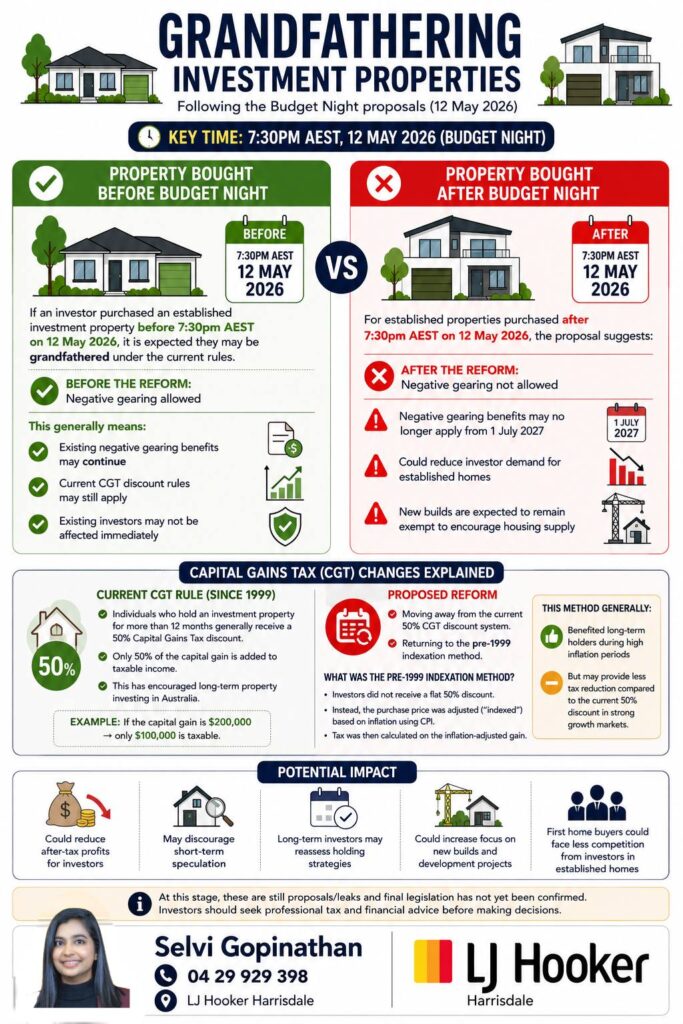
The Australian property market is once again at the centre of national discussion following proposed reforms to negative gearing and Capital Gains Tax (CGT). While these are currently proposals only and not law yet, the conversation is already influencing buyer confidence, investor behaviour, and long-term property strategies.
For first home buyers, families, and investors, understanding these proposed changes is important when making future property decisions.
What Is Negative Gearing?
Negative gearing happens when the costs of owning an investment property — such as loan interest, maintenance, insurance, and management fees — are higher than the rental income received.
Under the current system, investors can generally claim these losses as tax deductions against their taxable income.
This has been a long-standing incentive encouraging Australians to invest in property.
What Is Capital Gains Tax (CGT)?
Capital Gains Tax applies when an investment property is sold for a profit.
Currently:
- Investors who hold a property for more than 12 months may receive a 50% CGT discount.
- This means only half of the capital gain is added to taxable income.
Example:
If an investor makes a capital gain of:
- $200,000
Only: - $100,000 may be taxable under the current rules.
Importantly, a Principal Place of Residence (PPOR) — your family home — generally remains exempt from CGT.
What Are the Proposed Changes?
Based on discussions surrounding Budget 2026 proposals:
For Established Properties Purchased After Budget Night
There are proposals suggesting:
- Negative gearing benefits may no longer apply to established homes purchased after the proposed date.
- Existing investment properties purchased before the cut-off may be “grandfathered” under current rules.
- New build properties may remain exempt to encourage housing construction and supply.
Possible CGT Changes
There has also been discussion around:
- Moving away from the current 50% CGT discount system.
- Returning to a pre-1999 indexation-style method based on inflation.
At this stage, these remain proposed reforms only and final legislation has not yet been confirmed.
What Does “Grandfathering” Mean?
Grandfathering means:
- Existing investors who purchased before the reform date may continue under the current tax rules.
- Future purchases after the cut-off date could be treated differently.
This approach is often used by governments to avoid sudden disruption to existing property owners.
Potential Impact on the Property Market
1. Increased Focus on Family Homes
If investment tax benefits reduce, more Australians may focus on:
- Buying one quality long-term family home
- Upgrading their PPOR
- Building wealth through owner-occupied housing
Because the family home generally remains CGT exempt, many buyers may see stronger value in upgrading their own residence.
2. Reduced Competition for First Home Buyers
If fewer investors compete for established homes:
- First home buyers may have more negotiating power
- There may be greater housing choice
- Entry into the property market could become slightly easier
However, this may vary depending on suburb and supply levels.
3. Increased Demand for New Builds
Since new builds may remain exempt:
- Investors may shift focus toward house-and-land packages and construction projects
- Demand for land and building services could increase
- Construction activity may strengthen
This could particularly impact growth corridors and developing suburbs
4. Investor Behaviour May Change Early
Even before laws are passed, markets often react to:
- Media coverage
- Consumer confidence
- Future expectations
Some investors are already:
- Bringing forward purchases
- Reviewing portfolios
- Exploring new build opportunities
- Considering long-term holding strategies
Could Property Prices Fall?
There is no simple answer.
Property prices are influenced by many factors including:
- Interest rates
- Population growth
- Housing supply
- Employment
- Consumer confidence
- Migration
While tax changes can influence investor demand, strong population growth and limited housing supply may continue supporting prices in many areas.
Different suburbs and property types may react differently.
Why the Family Home May Become More Important
For many Australians, the proposed reforms reinforce the value of:
- Long-term home ownership
- Lifestyle stability
- Raising families in secure communities
- Building wealth through a PPOR
Because the family home remains largely protected from CGT, many buyers may prioritise upgrading into their “forever home” rather than owning multiple investment properties.
Important Reminder
These proposed reforms are:
- NOT law yet
- Subject to parliamentary approval
- Still open to change
Every buyer and investor’s situation is different.
Before making property or investment decisions, always speak with:
- A qualified accountant
- Tax adviser
- Financial planner
- Mortgage broker
Professional advice tailored to your circumstances is essential.
Final Thoughts
The proposed negative gearing and CGT reforms could reshape the Australian property landscape over the coming years.
While some investors may become more cautious, others may adapt by:
- Focusing on new builds
- Holding properties longer term
- Prioritising owner-occupied homes
For families and first home buyers, this could also create new opportunities in the market.
The key is staying informed, understanding your goals, and making strategic long-term decisions rather than reacting emotionally to headlines.
Selvi Gopinathan
Sales Representative
LJ Hooker Harrisdale